
Covering all the bases
The Dynamics of Fashion describes Japan as having a high-style image. It emphasizes Japan’s uniqueness and ability to blend cultures in their designs. But Japan is more than high society Avant Garde runway ready looks. There is, of course, the rich cultural history including the Silk Road. But there is also a thriving subset of counter culture fashions that have been remarked upon from around the world due to their strong sense of identity.
A Semi-Chronological Look
Japan was once considered “copyist” due to their ability to support fashion manufacturing. But Japan has improved their global image. Now, it’s more commonly thought of as having a sophisticated image. Made in Japan went out of their way to emphasize that the actual label “Made in Japan” evokes craftsmanship and high quality, maybe even luxury.
The textbook claims that in the 50’s and 60’s, Japan merely copied the west. Then in the 70’s, originality blossomed, but rather than these designers being considered the beginning of Japanese fashion, they were considered French due to their work taking off there. In the 80’s, Japanese avant-garde fashion became popular in the US. In the 90’s, popular Japanese fashion was influenced by hippie styles and 70’s punk. In this century, there has been an emphasis on clothing that blends various regional styles- Eastern, Western, and European.
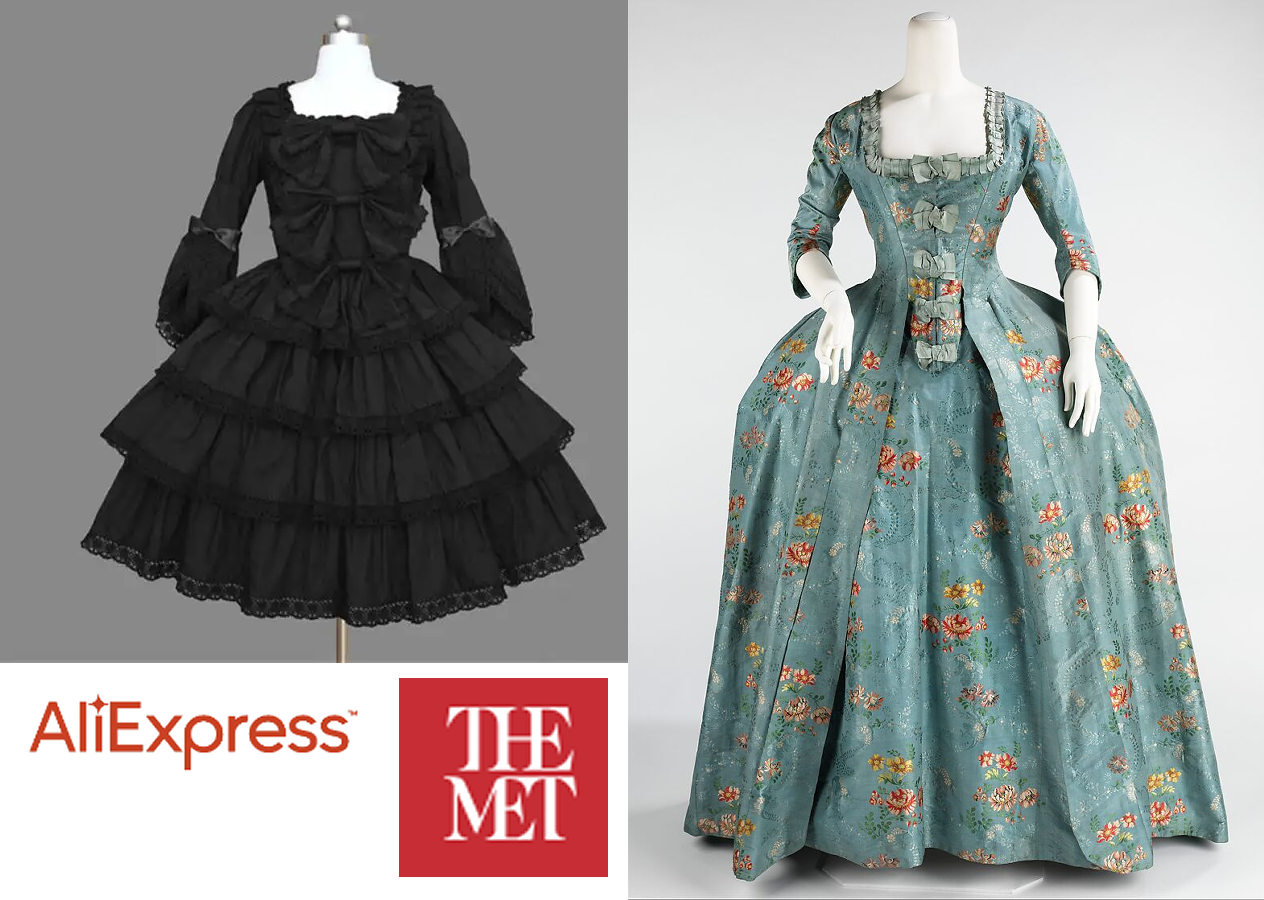
As elaborated upon in Japanese Fashion Cultures: Dress and Gender in Contemporary Japan, Japanese street style loves to take an existing style and reinterpret it. They do not simply imitate it, or create “knockoffs” in a cheaper fashion. Instead, they alter the structure and silhouette to create a new style. This has been done with both Edwardian and Victorian fashion, as well as the previously mentioned hippie and 70’s rock styles.
Japan has been concerned about their aging population, due to a very low birth rate. Part of the stated issue is the common devotion to work. A large percentage of adults, particularly women, work full time, and are not in relationships. This, while fairly common knowledge, had never occurred to me as a notably fashion altering state of being. But if the average Japanese adult spends the majority of their time at work, and does not go out with a significant other, then the majority of their wardrobe is going to be workwear and housewear.
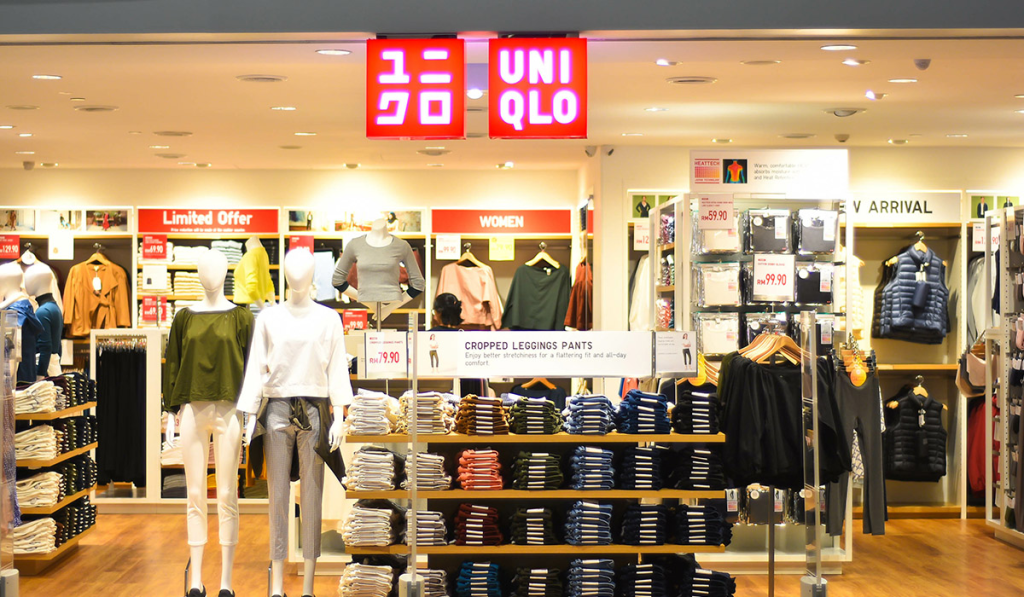
The biggest Japanese retailer in the US is Uniqlo, who boast simple and clean designs. They make both casual and work-appropriate clothing, but are not particularly “trendy”. They make staple pieces, not showstoppers. This sensible stance has been described as “Innovating simplicity.”
The Japanese Fashion Week, called Rakuten Fashion Week Tokyo because of its largest sponsor Rakuten, has been praised for uniqueness, but not everything that appears on the runway is meant to be worn by the common consumer.
Traditional vs Modern Niche
Kyoto
Kyoto was the capital of Japan for 11 centuries. It’s still considered the cultural capital, the Agency for Cultural Affairs has its headquarters there. There are world heritage sites, including palaces, gardens, temples and shrines.
But what I was most fascinated by when I personally visited Kyoto was the fabric. Kyoto was the easternmost point of the Silk Road. Modern day Kyoto’s two major industries are tourism and traditional Japanese crafts. “Crafts” has been a very belittled term in both the art and fashion worlds. But it can encompass anything from jewelry to fiber arts to pottery and ceramic, and even to the world famous origami. Creating fabrics and textiles, in this case, falls under the craft umbrella, and has been honed by families in Kyoto for generations.
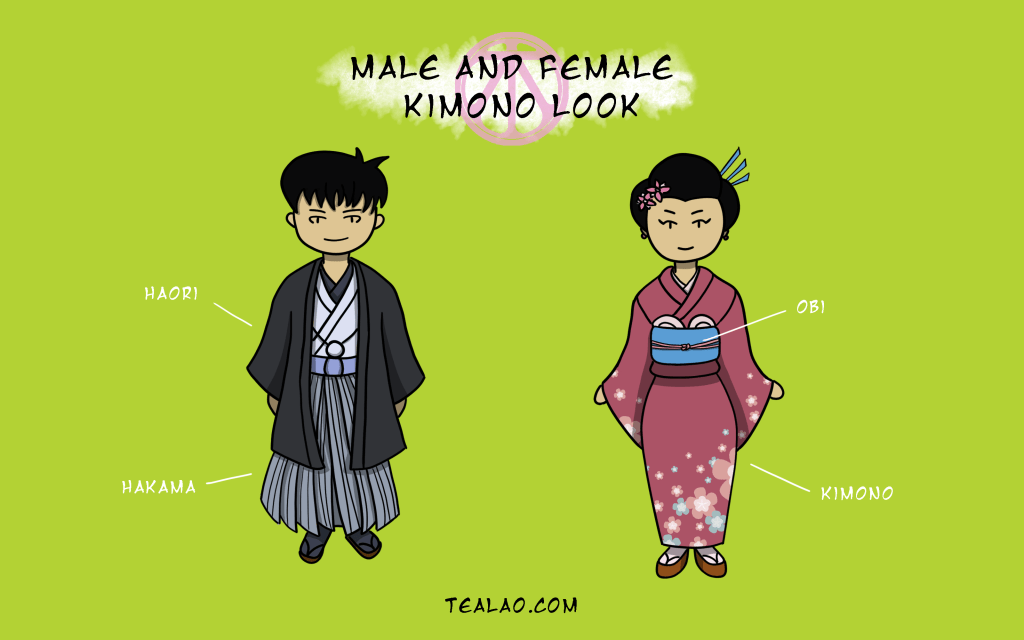
Kyoto’s kimono weavers are particularly renowned, and the city remains the premier center of kimono manufacturing. Made in Japan claims that the kimono is unisex, but the kimono truly has large gendered variations, down to the fabric itself. Male kimonos are generally plain, while female kimonos boast bright colors and designs. Male wearers have the option of an over jacket (haori) or trousers (hakama). Female wearer’s sleeves are larger and more open, and the placement and content of the belt (obi) is entirely different.

The obi, specifically, involves as much intricacy of pattern and design in the silk as the kimono itself does, and can therefore cost more than the kimono itself. And due to women’s obi being much larger and more detailed, these higher price points fall towards only half of their market. Keeping the handmade process alive is increasingly difficult due to the lack of purchases.
The weaving district is called Nishijin, and they take great pride in being able to create exact historical replicas and new items using authentic historical techniques. There is a great emphasis on traditionalism here, in part due to the historical nature of the city itself.
Tokyo
The current capital Tokyo, by contrast, is full of hyper modern and niche content. This includes fashion, of course, and the most popular location to see all of it is Harajuku. This is where items are on-trend, where people of various streetwear subcultures can find their newest item, and where you’re likely to see someone dressed to the nines of their own personal style.
Harajuku
Harajuku fashion as a whole is described as “theatrical mixing and mismatching different street fashion, a microphone to freedom of expression.” One of the most well known terms thrown around is kawaii, which simply means cute. But there are many hyperspecific niches that are catered to at Harajuku.
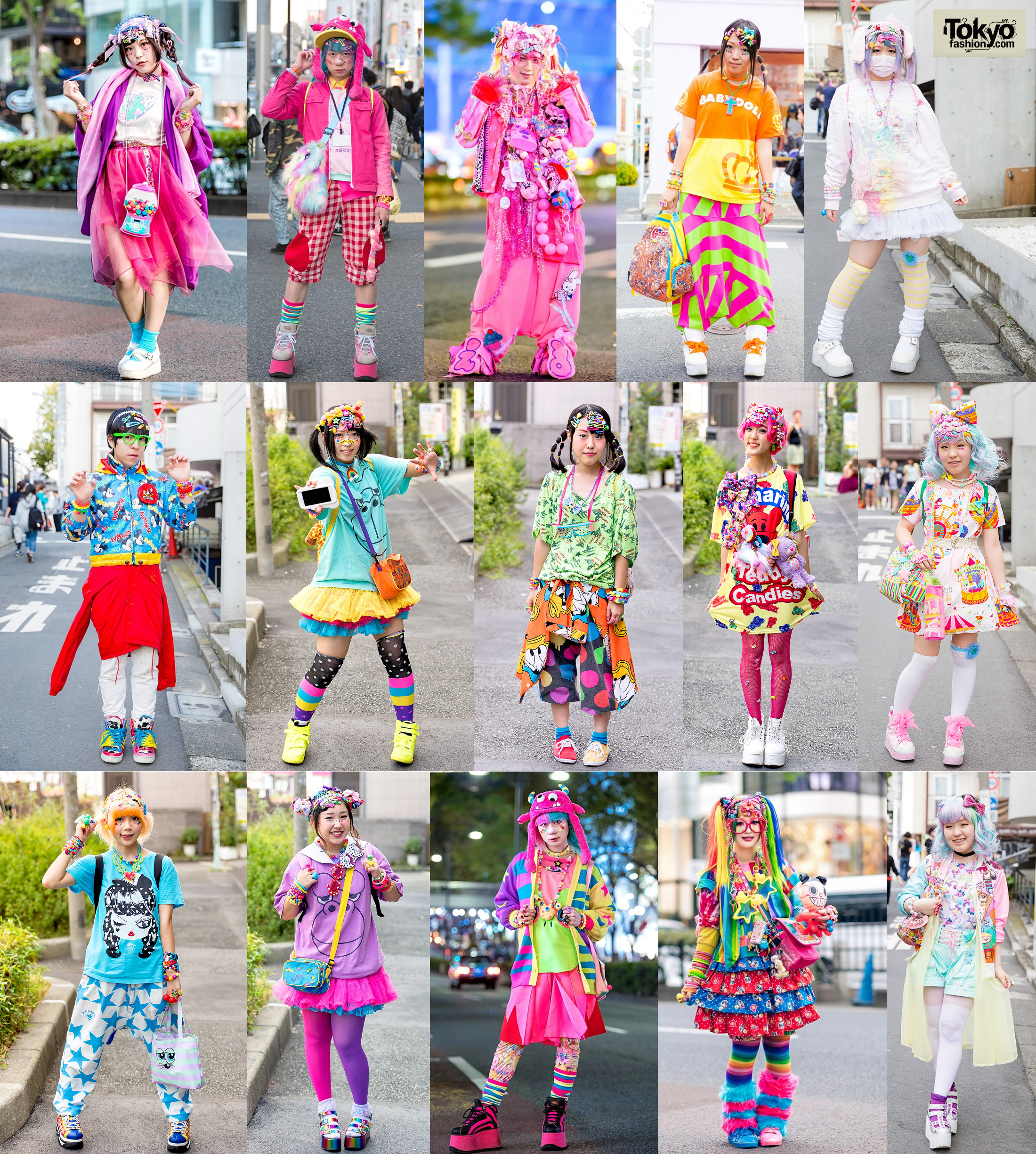
Decora fashion is identified by the copious amounts of accessories. The sillhouette is not necessarily standardized- there are flowy (full length and cropped) pants, shorts, tights, legwarmers, ankle/knee/thigh high socks, and every cut of skirt from tiered to tutu to maxi. Some people choose to define their waist, others choose to remain shapeless. Some people add cardigans or sweaters or bomber jackets, some layer a long sleeved shirt underneath, and some remain in short sleeves. there are standard collars and peter pan collars, there are chokers and long pendants. Shoes are often platforms, but some people choose to simply wear sneakers. There truly is no fixed “decora silhouette”. Nor is there a standardized color palette- although many people choose neons, there are many pastel decora fashionistas. Someone can choose to focus on one color, as the blue and pink outfits demonstrate, or a set of colors, or all of them! The binding tie is purposeful over-accesorization, with special emphasis on hair clips.
Lolita
The direct opposite of Decora, Lolita style is all about silhouette. Almost anything can be a lolita fashion as long as it is in the right shape. The shape in question involves a large poofy skirt that hits at about the knees. Sleeves may be short or long, there is generally a collar to the shirt, and there are often socks or tights. The shoes can vary based on the subcategory, but mary janes are the most common.
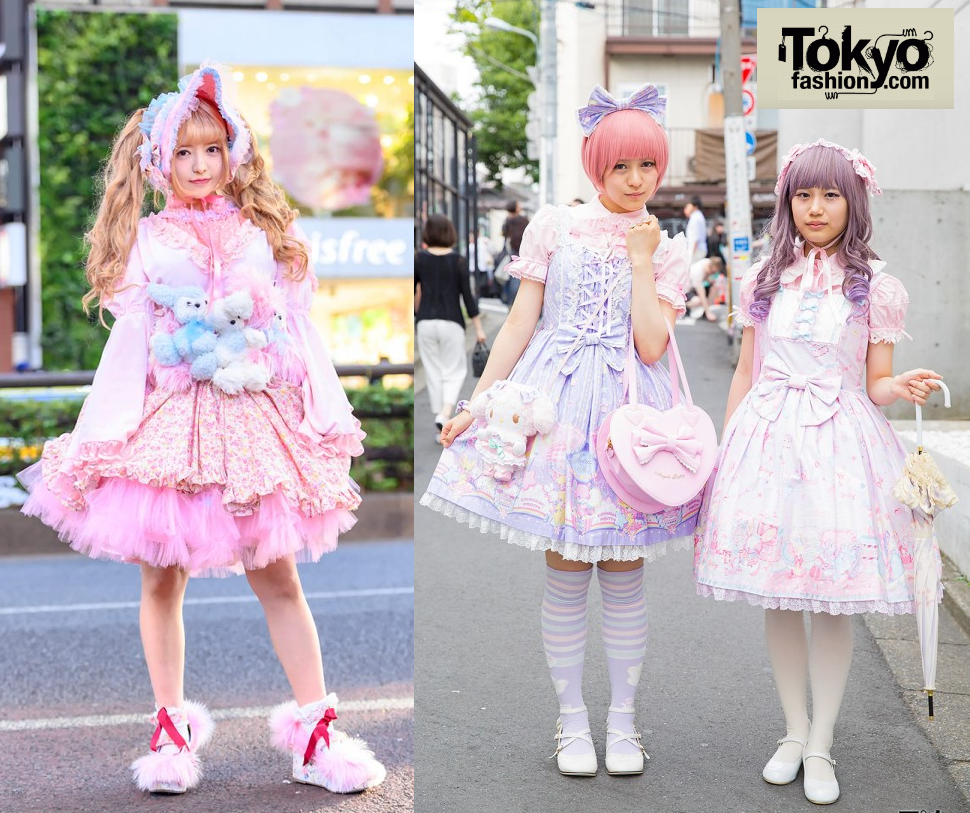
Sweet Lolita and Gothic Lolita are the most popular. Sweet lolita is characterized by pastels and many bows, and may be decorated with actual sweets.

Kuro and Shiro Lolita are often mistaken as subsections of the lolita style, but in fact they simply mean black and white, and any outfit (or coord, short for coordination) can be a shiro or kuro version of a style, as long as it is entirely that color. Some gothic lolita coords are kuro gothic, as they are entirely black. The ones that include white, obviously, would not receive this extra label. Two of these are simply gothic, while two are kuro gothic.

Wa lolita adds in a historical element, usually the kimono sleeves, but sometimes an obi or a more traditionally pleated skirt, though it keeps the short length. It can be combined with other styles, the following example on the right might be considered wa gothic lolita. Qi and hanbok lolita designs combine Chinese and Korean traditional clothing elements into the lolita aesthetic. This is usually in the collar, sleeve, and belt regions.
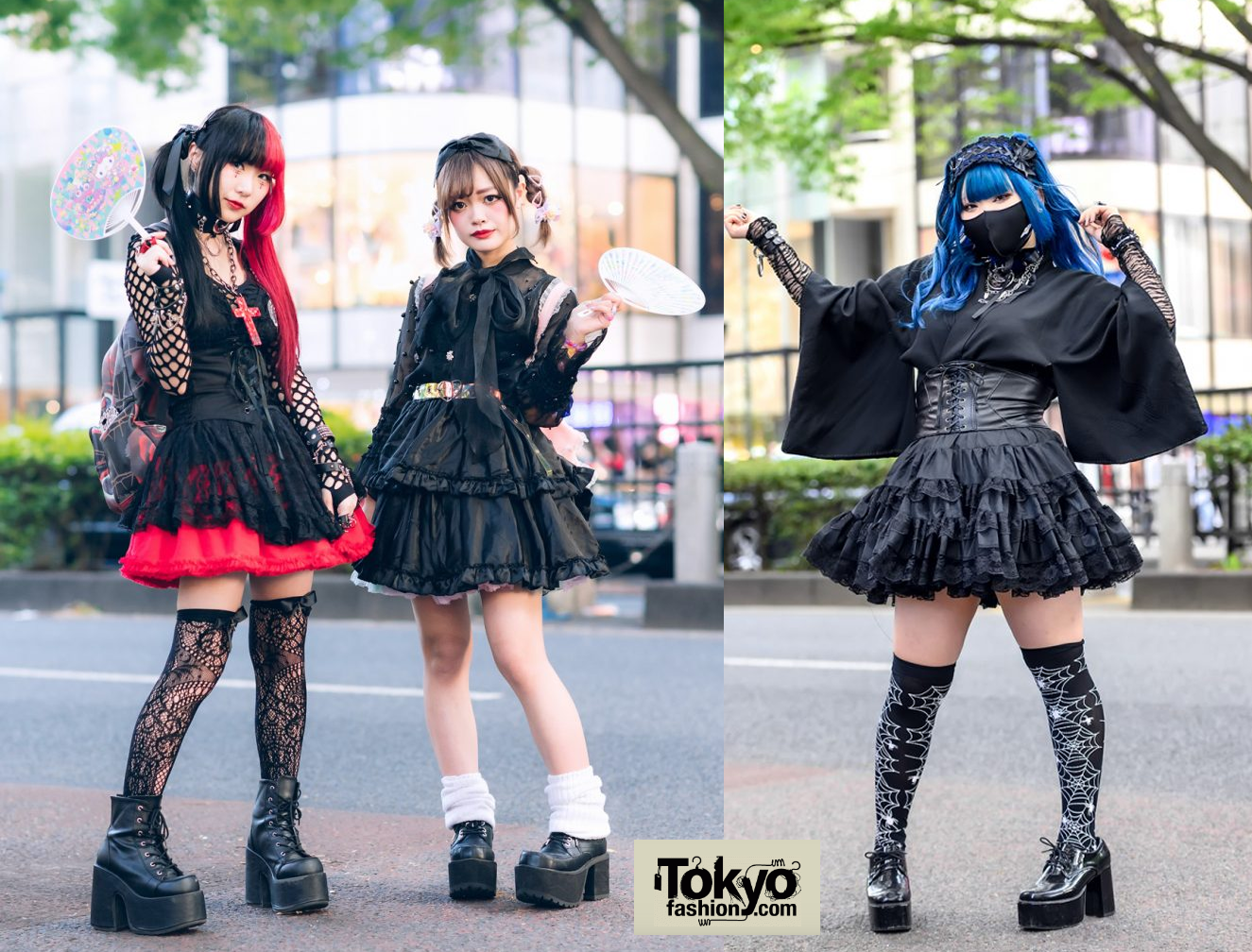
It can sometimes be difficult to differentiate gothic, goth, and punk lolita styles. There is not a strong consensus on what makes each different, and things are often labeled as gothic as an umbrella. All three of these coords may be considered gothic, but the one on the far right may be considered goth or punk as well.
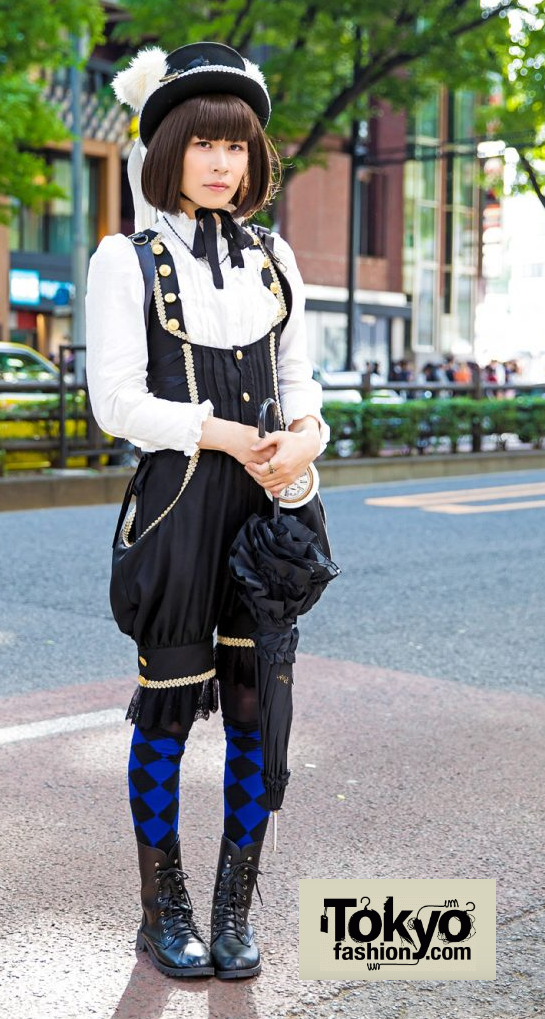
Ouji lolita is also referred to as kodona, and it refers to a more masculine lolita style. It’s sometimes referred to as “princelike”, the counterpart to princess or hime lolita.
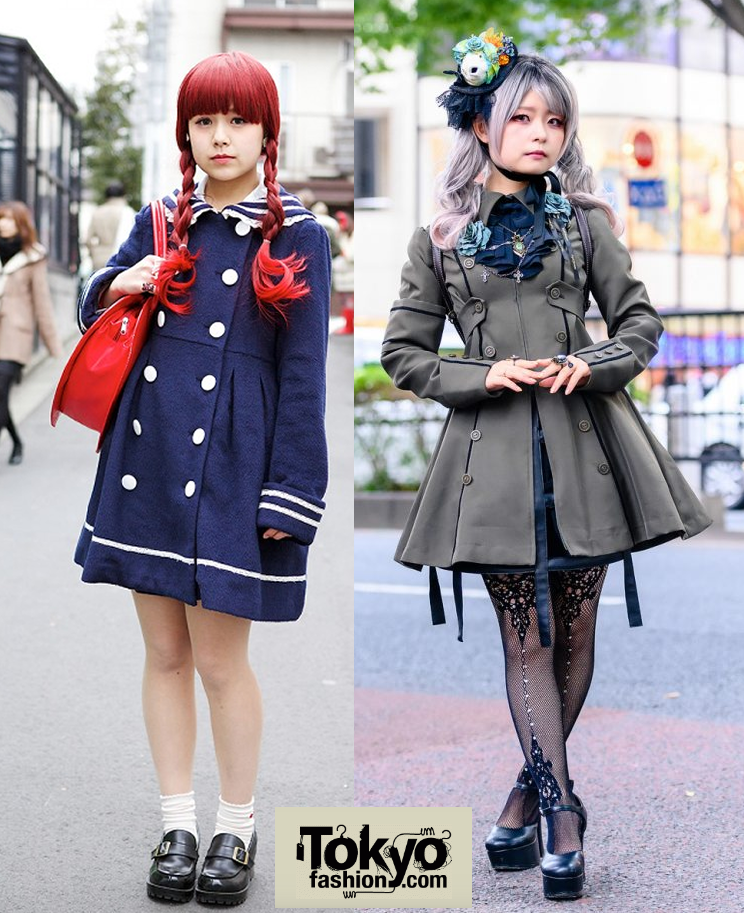
There is a surprisingly large segment of lolita fashion dedicated to mimicking jobs in particular. These two coords are sailor and military inspired, respectively.

Similar to the sailor and military coords, it seems the way to make a school lolita coord is to nail the jacket. These particular antique lolitas on the right seem to be mostly about the textures and fabric, in a way that a lot of the other coords are not. They tend to be more about pattern and color.

For example, these country and antique lolitas rely on their dress’ patterns to pull them into the desired aesthetic. Yes, the straw hat does help, but if these dresses were recolored they could just be standard sweet lolita coords.

Maid dresses are likely not a surprise to see here.
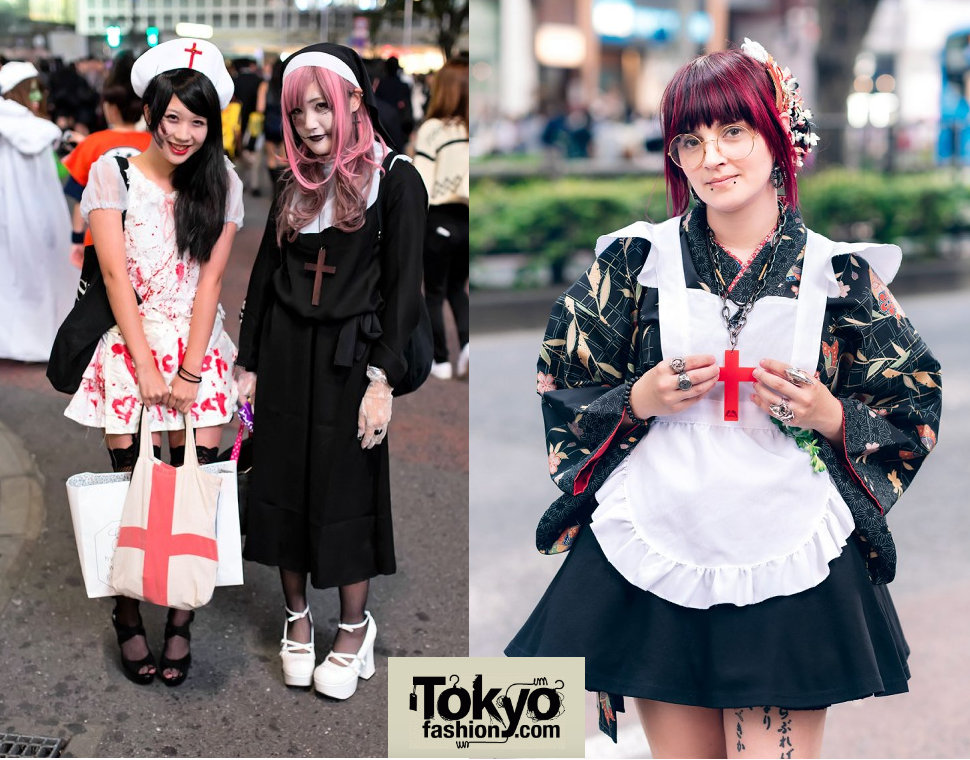
But there is a large segment of nurse and nun lolita coords as well. There are so many gory nurse coords, in fact, that they’re called guro lolita. The right coord might be considered a wa nurse lolita coord, due to the kimono top.
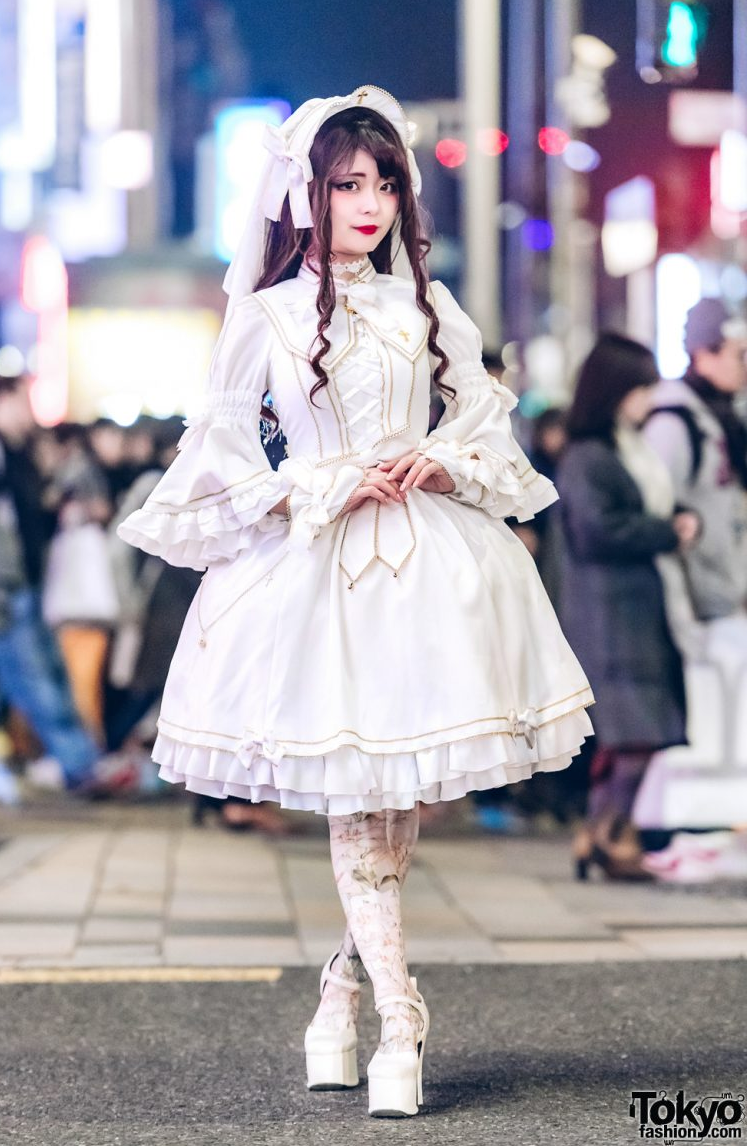
This shiro nun coord is particularly well done in my opinion, the gold trim really matches throughout the outfit, including the tights.

Alice from Alice’s Adventures in Wonderland is incredibly popular as well, as her outfit is already the signature lolita shape.

There are a plethora of combinations of various styles, that still manage to retain the identifying features of their original aesthetic while conforming to the lolita silhouette. These pirate and steampunk coords are very committed to blending their aesthetics. The combination of decora and lolita can be referred to as ott, but is generally only done so in English speaking countries, as it stands for “over the top”.
Modern Fashion
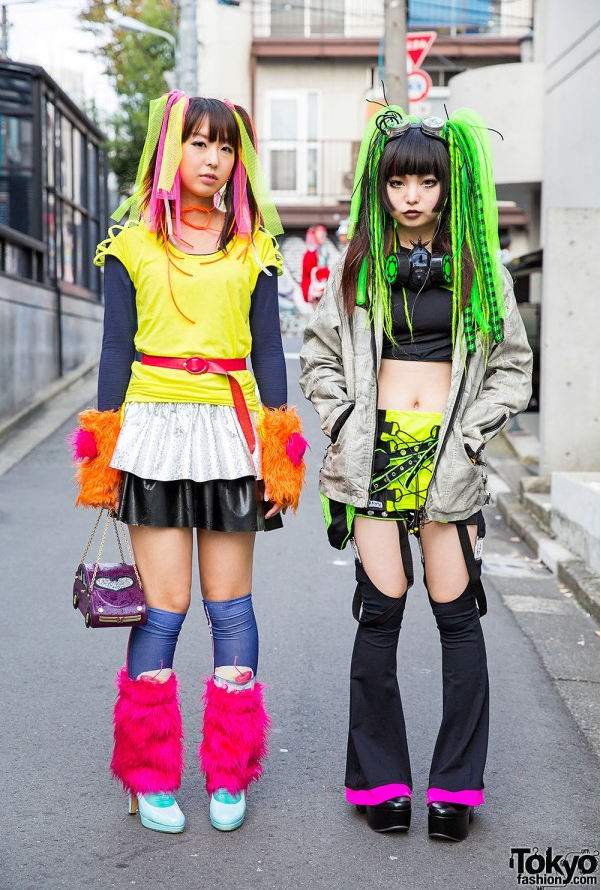
The Japanese government made a concentrated effort to create a “cool” image of Japan to project to the rest of world, which included fashion as well as idols and pop music, which heavily influence young people’s trends. But a majority of the styles that flourish in Harajuku are considered unattractive, unappealing, or as we would likely say here in the US, cringe. So why do they do it?
Lolita, and many other niche fashion styles, are not meant to appeal to other people. They are meant to appeal to the wearer. They are not meant to be attractive or entice anyone, they are meant to bring joy. This rejection of outside opinion and radicalization of fashion is a huge inspiration, and part of the reason that these fashions are so beloved by the groups that participate in them.
Japan has made amazing contributions to the world of fashion, from their historical silk creation to their runway looks to their casual innovation to their fashion subcultures. As Kunihiko Morinag said, “Fashion… can become a culture or express what the generation… or even what the country is about”
Citations
Aronsson, A. S. (2015). Career women in contemporary japan : pursuing identities, fashioning lives (Ser. Routledge contemporary japan series, 56). Routledge/Taylor & Francis Group. Retrieved November 29, 2023, from https://www.proquest.com/docview/1037964315.
CNN. (2019). Made in japan : part 1. Retrieved November 29, 2023, from https://video-alexanderstreet-com.ezproxy.hofstra.edu/watch/made-in-japan-part-1?utm_campaign=Video&utm_medium=MARC&utm_source=aspresolver.
Craig, T. J., Jubelt, L., Jubelt, L., Songyu, Z., Cuellar, D., Lirdluckanawong, T., Sossna, A., Wang, Y., Adams, M., Kesslering, J., Iftner, N., Ruiz Tafoya, H., Chongstitwattana, P., Songyu, Z., Cuellar, D., Lirdluckanawong, T., Sossna, A., Wang, Y., Adams, M., … Chongstitwattana, P. (2017). Cool japan : case studies from japan’s cultural and creative industries. BlueSky Publishing.
Freedman, A., & Slade, T. (Eds.). (2018). Introducing japanese popular culture. Routledge, an imprint of the Taylor & Francis Group.
Hareven, T. K. (2002). The silk weavers of kyoto : family and work in a changing traditional industry. University of California Press. Retrieved November 29, 2023, from https://web-s-ebscohost-com.ezproxy.hofstra.edu/ehost/detail/detail?vid=0&sid=3019660d-146f-4bfe-9eeb-c8f170092c67%40redis&bdata=JnNpdGU9ZWhvc3QtbGl2ZQ%3d%3d#AN=90570&db=nlebk.
Monden, M. (2015). Japanese fashion cultures : dress and gender in contemporary japan (Ser. Dress, body, culture). Bloomsbury. Retrieved November 29, 2023, from https://web-s-ebscohost-com.ezproxy.hofstra.edu/ehost/detail/detail?vid=0&sid=cc38f89b-a203-4424-9165-354dc91ad635%40redis&bdata=JnNpdGU9ZWhvc3QtbGl2ZQ%3d%3d#AN=831257&db=nlebk.
Stavros, M. G. (2014). Kyoto : an urban history of japan’s premodern capital (Ser. Spatial habitus: making and meaning in asia’s architecture). University of Hawaiʻi Press. https://doi.org/10.21313/9780824847845
Stone, E., & Farnan, S. A. (2022). The Dynamics of Fashion (6th ed.). Bloomsbury USA. https://reader2.yuzu.com/books/9781501373060
 Jules Dragon Fashion
Leave a comment