A Deep Dive into Dresses
Bridal trends have changed drastically over the past few years, and we’re seeing prioritization of personal style over tradition. But where did this tradition come from, and what are some of the hold-overs?
Shift away from tradition in general
New York Bridal Fashion Week 2023 and 2024 made it clear that nontraditional wedding dresses are the next big thing. The hashtag has more than 456 million views on Tiktok, and designers have been taking full advantage. This is, in part, due to celebrities choosing to express their style.

But the pandemic has also made it clear to many people that without societal expectations constantly on them, they prefer to express themselves differently. Several different bloggers have gone as far as to say there “are no rules“. And when better to express yourself and show love to yourself than on the day that you honor your love?
Bridal stylists and fashion experts seem to be reiterating the same point: If you look and feel good, it’s the outfit for you. Beyond the obvious message of self acceptance and uniqueness, this makes sense from a marketing perspective. A wider range of options means a more eyecatching display, a more dynamic sales pitch, and more opportunities to upcharge for something custom.
Colors
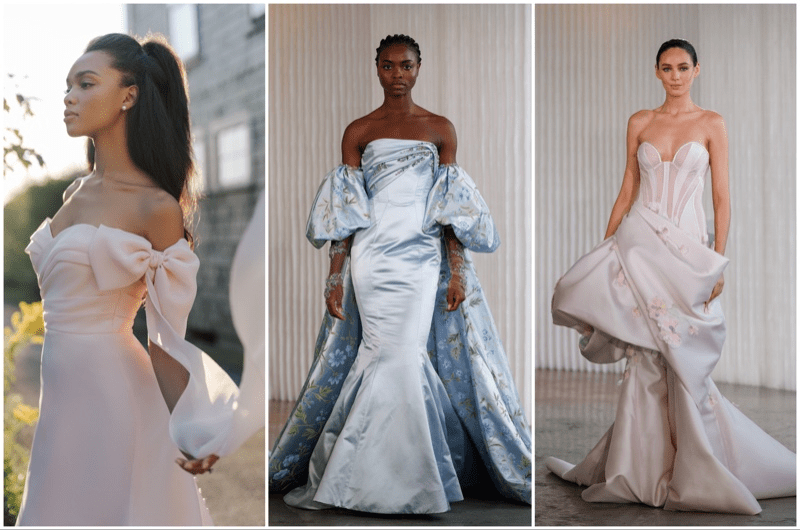
Many brides are choosing to add a pop of color to their white dresses, or discard the white altogether. Brides.com claims that nontraditionally colored gowns now made up 10% of David’s Bridal‘s stock in 2022, as opposed to just over 7.5% in 2021. A 30% increase, which is a massive growth in an industry in which classic has been a best seller for decades. They add that the most popular colors are

- champagne/cashmere
- 1 in 4 nontraditional brides choose a “nonwhite-but-neutral hue”

- blush/pink
- red
- While a bright cherry red was a trend in New York as well as Paris Fashion Week 2024, there were no red dresses at New York Bridal Fashion Week 2024.
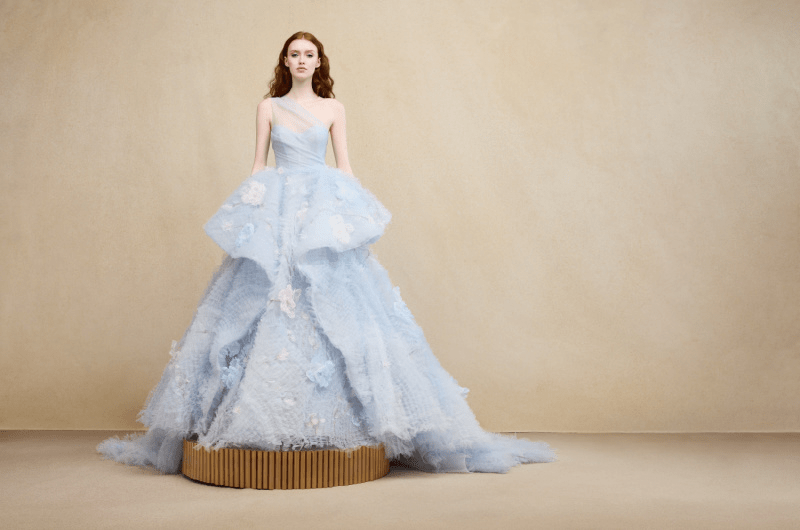
- blue
- Certainly a bold way to show off your something blue!
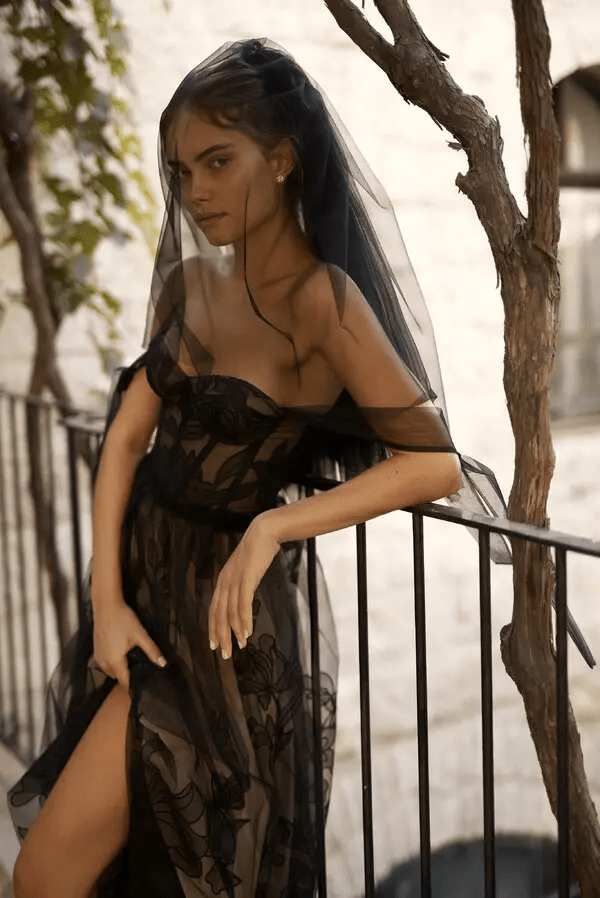
- black
- Black dresses were so popular in Fall of 2022 that they became offered in David’s Bridal stores rather than as a custom order
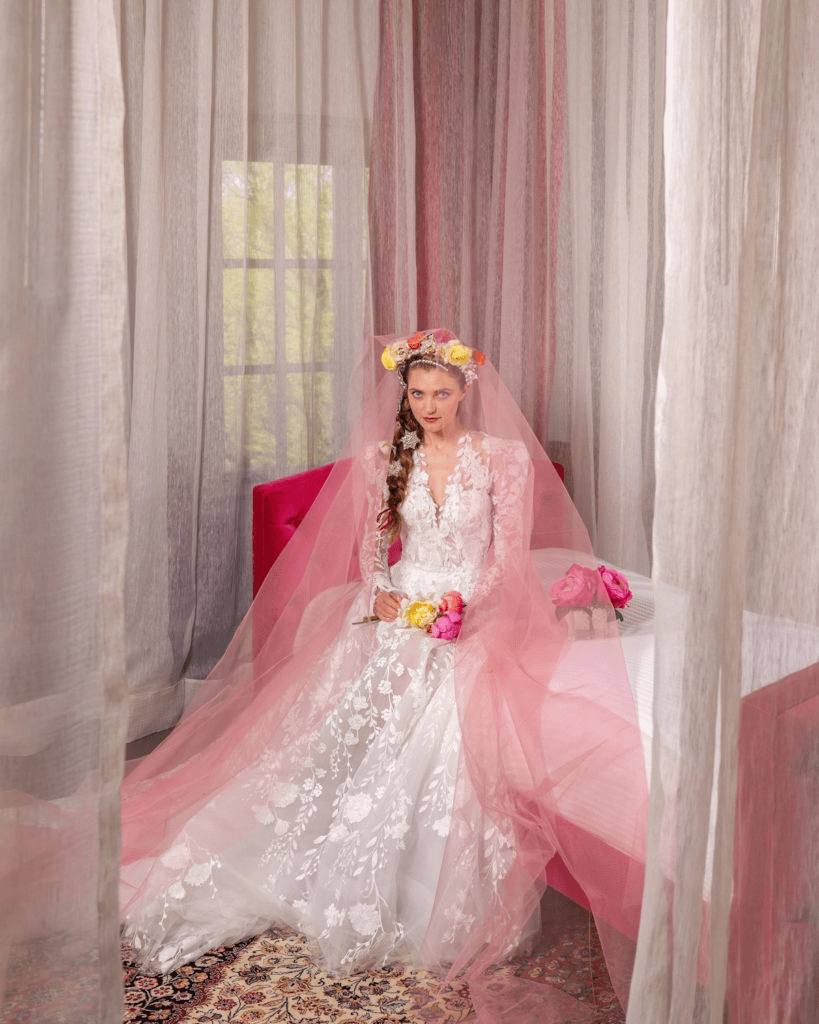
Neutral dresses (champagne, cashmere, blush, pink) can also be paired with a loud and colorful bouquet or veil, further adding personality to a color story.
Textures
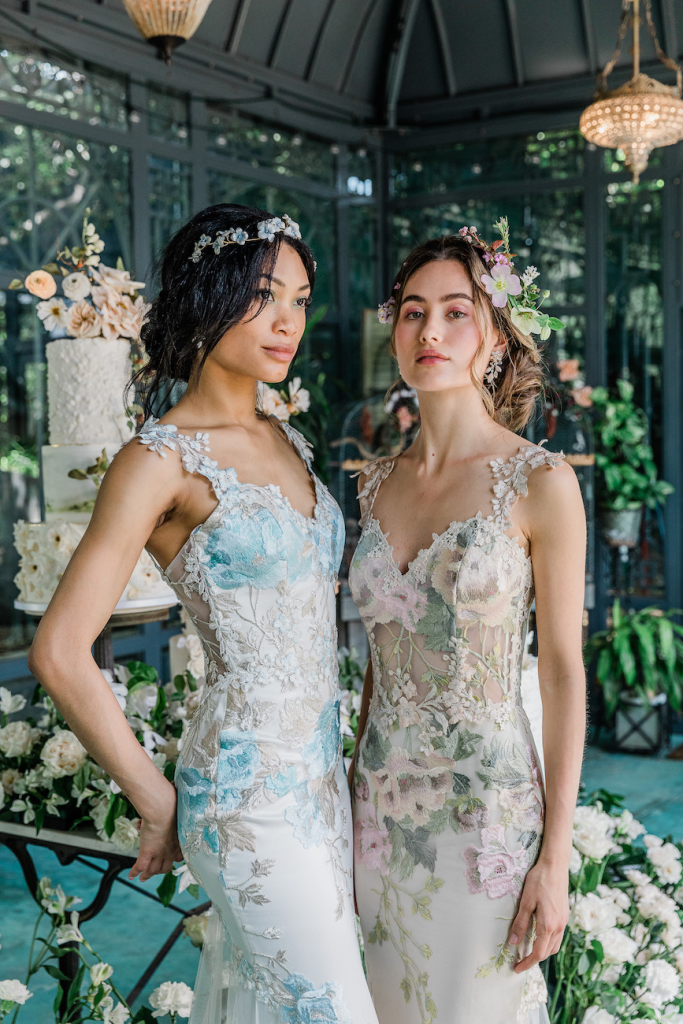
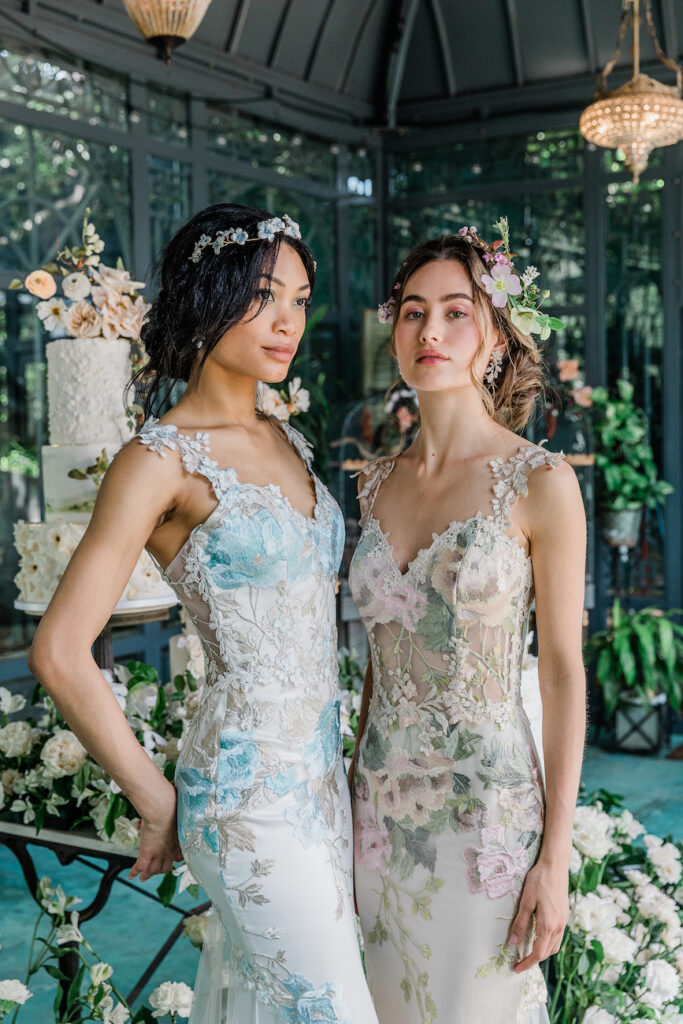
Of course, white on white textures have been popular for years, with my own mother’s wedding dress including white on white embroidery. But recently, alongside with the break from wedding dress fabric being pure white, decorations have begun to shift as well. Colorful embroidery flowers, printed fabric, and even beads and sequins have been featured much more prominently as a less drastic option than changing the dress color itself.
Non dresses
We are also seeing a huge trend of people choosing not to wear a dress at all. Popular alternatives include

- jumpsuits

- seperates
- suits
- two piece set
- transformation looks with multiple pieces
Expansion
Not only are brides expanding what they can wear at the ceremony, they’re expanding what they can wear throughout the entire event. Brides no longer have to stay in their formal ceremony gown when taking the dance floor. If there is an after-party, there might even be a third change.
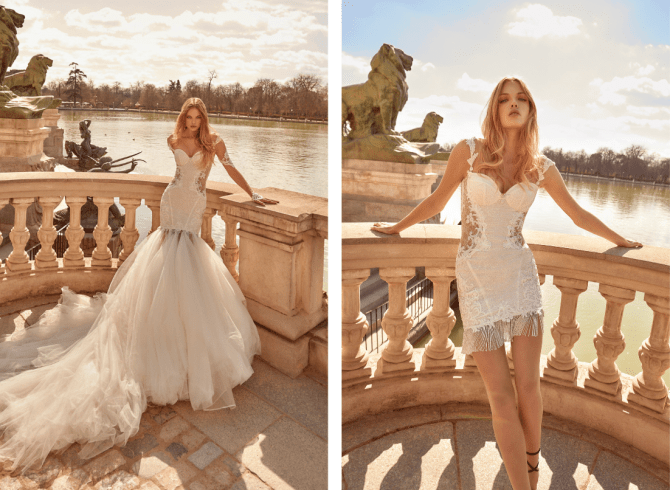
As mentioned in the non-dress category, some brides choose a transformation look, taking off a larger skirt or removing sleeves. But some choose different looks altogether, expanding into different colors, lengths, and fabrics.
Additionally, brides choose items that can be reworn after their wedding day. A reception or after-party dress is more commonly chosen to be reworn, and if they chose to keep it white, many choose to dye it in order to fit in better with the rest of their wardrobe.
Tradition
White, full length, fluffy veil, diamond ring. That’s what a classic wedding ensemble looked like. But why was it classic? Various cultures around the world do not traditionally involve white. In various East Asian cultures, red was preferred for the wedding day. In India, there is no set color scheme (though people often wear red, gold, peach, or orange), but they avoid white as it’s bad luck. So why white?
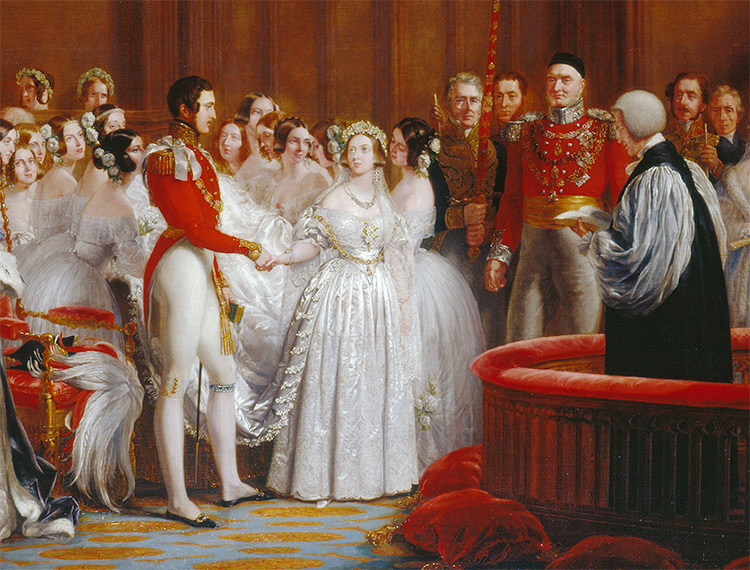
Queen Victoria married Prince Albert in 1840, marrying for love in white French lace. This set the style for the next nearly 200 years, abruptly relegating the formerly traditional royal wedding colors to obscurity. Before then, dresses were red, gold, or silver.
So there is no reason to keep white as the defining characteristic. In fact, I’m surprised it’s taken us this long to divorce from it, even if only 10% of current brides at a nationwide chain are opting for the personalized take.
Sizing charts
An unfortunate holdover from tradition, however, is sizing. Women’s sizing charts in general are known to be complicated, inaccurate, and frustrating, but wedding sizing seems to be even more so. So where did this come from?
1930s-50s
In 1939, the Department of Agriculture, motivated by US manufacturing inefficiency, attempted to standardize women’s sizing. They offered a monetary incentive to get measured, and collected 15,000 women’s measurements. They collected 58 measurements for each. However, this incentive meant that the majority of women were those who needed that money- working women, poor women, women who may have been malnourished. The data did not accurately depict the range of sizes in the US even then, much less now. Additionally, even though they did collect data from various ethnicities, they only factored the data from white women into their sizing chart. Finally, the measurements assumed most women had an hourglass figure, and they placed the most importance on bust measurement.
In the later half of the 1940s, the Mail-Order Association of America hired the National Bureau of Standards to “reanalyze the data.” They evidently requested that measurements from female air force members be prioritized, and these were incredibly fit women. This resulted in the 1958 standard with sizes 8 to 38 (or 42, depending on who you ask), with Tall, Regular, and Short designations. Whoever you ask, these sizes are widely declared to be arbitrary.
1970’s-2000’s
There was an attempt at a revamp in the 1970’s. In 1995 the American Standards for Testing and Materials International created their own sizing standard, but it is in no way mandatory. In 2003, the Textile Clothing Technology Corporation scanned 11,000 US bodies in 13 locations from ages 18-80. This project was called SizeUSA. It showed the average body as much larger than any of the previous standardized charts suggested.
The other inherent assumption of the original size chart was an hourglass figure. The SizeUSA project identified 9 body shapes, with an hourglass holding true for 8% of American women- and the data seems to match up with similar surveys in the UK, South Korea, and Mexico.
Summary of Changes
1940’s sample which resulted in the 1958 standardization had the smallest size as an 8. The 2008 size 8 was 5-6 inches larger, making it equal to a size 14 or 16 in 1958. A differential of ~7 means a 1958 size 8’s measurements are closer to a 2008 size 0 or 00.
The smallest size in 1995 was a size 2, but the 1995 standard was built directly off of the 1958 standard, meaning that there was actually a reduction of smaller sizes available. The 1995 size 5 became a size 2 in 2011, so even with the addition of 0 and 00 sizing, there was no actual additions to the size chart, just a maintaining of the same size in the new number system.
- 1940s size 15 = 2008’s size 8
- 1940’s size 16 = 1960’s size 12 = 2019’s size 6
- 1995’s size 5 = 2011’s size 2
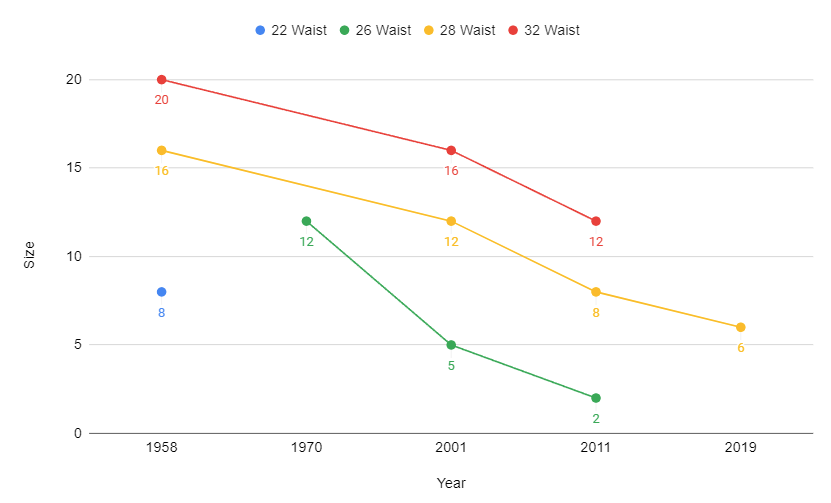
These numbers getting increasingly smaller is what’s called vanity sizing.

The favorite example is Marilyn Monroe. She would’ve been a size 16 in the 40’s, was evidently a size 12 in the 60’s, which was a size 6 in 2019.
2020

While I have no way of verifying that this information is accurate across the board, this is the most popular google result when you look up “US Women’s Size Chart” and it was published in 2020, so I have to assume it has been useful for some people. You’ll note that the smallest waist listed is once again a 22, as it was in the 1958 listing, but it is a size 00 rather than a size 8. 2011’s size 00 was a 25 inch waist.
Bridal Sizing
The reason behind the deep dive into sizing was to showcase the way that wedding dress shopping keeps a totally different size chart from standard sizes.
A bride size 18 is a standard 12, reinflating these numbers back up to the 70’s if not the ’58 standard itself. The knot claims it’s based in traditional European sizing from the 1940’s, rather than being based in any American data at all.
Availability
The thing that shocked me was the in-store available sizing. Brittany Bergeron from The Bridal Finery claims sample sizes run from size 6 to 10, so standard sizing 2 to 6. That is only a 25 inch to a 28 inch waist. I’m 5’3 and generally pretty petite, and my waist is 27 inches. Anyone even slightly taller than me should have a larger waist size than that. A 28 inch waist is not realistic in the slightest, it’s a size Small.
Kleinfeld claims that they have samples from size 8 to 22, and that bridal size 8 is standard 4, and 20 is standard 16. I would then assume that they carry standard size 4 to 18, Small to XL. That, on the surface, is a much more reasonable size range. However the average waist measurement for women in the US is 38.6 inches. Size 18 caps out at a 38 inch waist.
This means that catering to the “standard” size range of S to XL does not even include the average woman in the US. It only includes women below the average. Over half of the US population is unable to try on a dress in-store. Wedding dresses can be sized down (and in fact, they encourage people to choose their size based on their largest measurement and get it tailored smaller) three sizes comfortably, but can be altered more depending on the fabric and construction. They can only be sized up one or two sizes without changing the closures.
Conclusion
The data has been gathered, the need is apparent, the technology is available. There is no reason, in my eyes, that this standard should remain untouched while the classical image of bridal wear is evolving into the beautiful and expressive landscape that we are seeing today. If we can ditch the all white floor length gown, we can ditch the sizing inaccuracy and blatant exclusion of the average (and everyone above average) woman.
Citations
Booth, J. (2023, February 2). Here’s how to determine your wedding dress size. Brides. https://www.brides.com/wedding-dress-sizing-guide-7098705
Frank, C. (2023, September 24). We found the 25 best non-traditional wedding dresses to shake up your bridal look. Brides. https://www.brides.com/non-traditional-wedding-dresses-5115943
Stampler, L. (2014, October 23). Women’s clothing sizes: When we started measuring them. Time. https://time.com/3532014/women-clothing-sizes-history/
Team, S. (2019, November 19). A brief history of Sizing Systems. Medium. https://medium.com/sizolution/a-brief-history-of-sizing-systems-aee6bd066834
Varina, R. (2022, October 11). How the rules around wedding fashion are changing. Brides. https://www.brides.com/how-wedding-fashion-rules-changing-6499485
Whalley, L. (2023, May 29). 28 non-traditional wedding dresses if classic isn’t your vibe. The Knot. https://www.theknot.com/content/nontraditional-wedding-dress-ideas
Whalley, L. (2023a, April 7). Everything you need to know about wedding dress sizes. The Knot. https://www.theknot.com/content/wedding-dress-sizes
What to know about wedding dress sizes-don’t freak at the number! Kleinfeld Bridal. (2020, April 22). https://www.kleinfeldbridal.com/2020/02/24/wedding-dress-sizes-101/
 Jules Dragon Fashion

Leave a comment