
Is there a bad way to thrift?
Reduce, Reuse, Recycle. Reducing consumption of clothes is difficult in a world where social media influencers post hauls, try-ons, and constant outfit updates. The constant subliminal messaging of overconsumption is overwhelming for most shoppers, motivating more frequent purchases. Keeping in-fashion was difficult enough when it was seasonal, now there are micro trends that can sweep through in a matter of days. I’m certainly guilty of seeing a trend and wanting to hop on. Reusing old pieces is amazing, and one easy way to reuse outside of items you already own is to purchase used clothing. You can then recycle said clothing into new trends, or purchase vintage which has come back into style.
A brief recap on thrifting
Thrift stores have existed for generations, and seem to be more popular than ever. When my mother was in high school, thrifted clothes were shameful, and people called them poor for it. But now, influencers proudly showcase thrifted finds, people casually brag about how cheap they found items for, and secondhand is no longer second best. My previous thrift timeline blog explores this concept in more detail. This drastic shift in messaging is a major step in the right direction for sustainability in fashion. But because of the popularity of thrift stores, some questions have been raised about the way people are approaching them.
Thrift Flips

It’s one thing to alter an item that just barely doesn’t fit you- taking it in a few inches at the waist, maybe adjusting the length of the hem or the sleeves. But many people now go to thrift stores as essentially fabric stores. Popular DIY youtuber Rachel Maksy has made clothing out of bedsheets, table cloths, as well as pillow cases and jackets. The practice being called into question is taking large or extra large items and turning them into completely different pieces for smaller bodies.
What could be wrong with thrift flips?
A particularly widespread critique of this practice centers around inclusivity. Does buying pieces that are too large in order to alter them take those pieces away from people they would fit as-is? People in smaller sizes can find items that fit them in smaller sizes, but people who wear larger sizes can’t buy smaller. Yes, theoretically, it is possible to upsize clothing that is too small, but it is more difficult than downsizing. Also, people should not be asked to learn a whole new skill just to be able to clothe themself. The decision to alter clothing should be one taken freely, rather than forced out of necessity due to lack of options.

These critiques come on upcycler’s videos, on Instagram, Tiktok, and Youtube. But due to the nature of comments, there is almost no way to verify whether these are coming from people affected by this issue, or if this is virtue signaling by people defending against a fake problem. Are there truly less options for plus sized people in thrift stores due to upcycling, or are less people donating plus sized clothing to thrift stores?
Response to criticism
Replies to this comment vary. Some people point out that those selling the clothes don’t care, as long as they get paid. In Canada, only 25% of donated clothing gets sold in a thrift store- 50% getting put up for sale, and the other 50% being resold to other countries, converted into rags or recycled fabric, or simply put into a landfill. Americans create 16 trillion tons of textile waste annually. About 4% gets exported, 15% recycled, 18% gets burned, and 62% gets thrown into landfills. When it comes to donated clothes, 5% goes to a landfill, and the rest is put on racks, then switched to a mass buying warehouse if they’re not sold. These secondhand stores do not follow the items further. This means that the only way to know it doesn’t go into a landfill is to have it get bought.
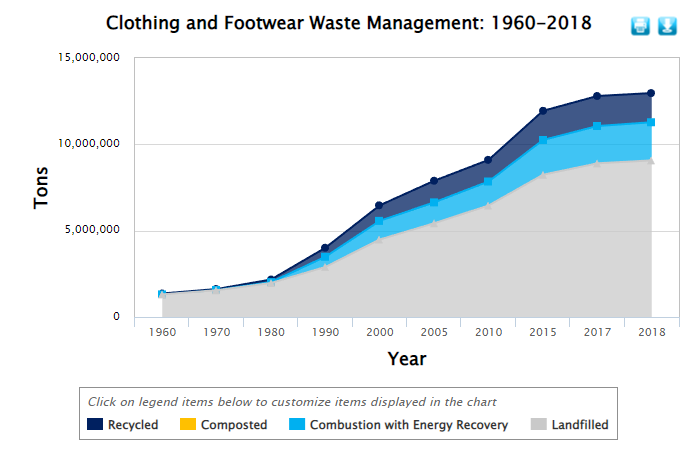
And finally, many people comment that turning an old item into a new item, as long as it gets worn, brings joy to someone and shouldn’t be dismissed for hypotheticals. There is an element of gender to this, as is unfortunately nearly inescapable in our society. The majority of fashion influencers who upcycle are women. Critiques towards a niche community of women are not new, and can often be blown out of proportion and condescending. For this reason, it is best to be cautious when hearing a critique of any traditionally feminine hobby, which includes sewing and fashion. While valid critiques can exist, misogyny is a powerful motivator.
My Personal Opinion on the subject
People who are finding joy in old items, whether that be buying them to keep as-is, or modifying them to their tastes, are doing a great service for our planet. Keeping clothing out of landfills is always good. There is of course room for improvement, in every part of the fashion industry, but cornering creative people with no real proof of the damage claimed seems especially petty. Because of these reasons I believe that this critique of upcycling is unwarranted without data and evidence, as there are massive positive benefits to the practice.
Citations
Environmental Protection Agency. (2021, December 14). Nondurable Goods: Product-Specific Data. EPA. Retrieved November 10, 2022, from https://www.epa.gov/facts-and-figures-about-materials-waste-and-recycling/nondurable-goods-product-specific-data#ClothingandFootwear
Jay, P. (2018, May 29). Here’s where your donated clothing really ends up . CBCnews. Retrieved November 10, 2022, from https://www.cbc.ca/news/canada/ottawa/donated-clothing-where-it-ends-up-1.4662023
Porter, B. (n.d.). What really happens to unwanted clothes? Green American Magazine. Retrieved November 10, 2022, from https://www.greenamerica.org/unraveling-fashion-industry/what-really-happens-unwanted-clothes
Strutner, S. (2021, January 5). Here’s what goodwill actually does with your donated clothes. HuffPost. Retrieved November 10, 2022, from https://www.huffpost.com/entry/what-does-goodwill-do-with-your-clothes_n_57e06b96e4b0071a6e092352
 Jules Dragon Fashion
Leave a comment