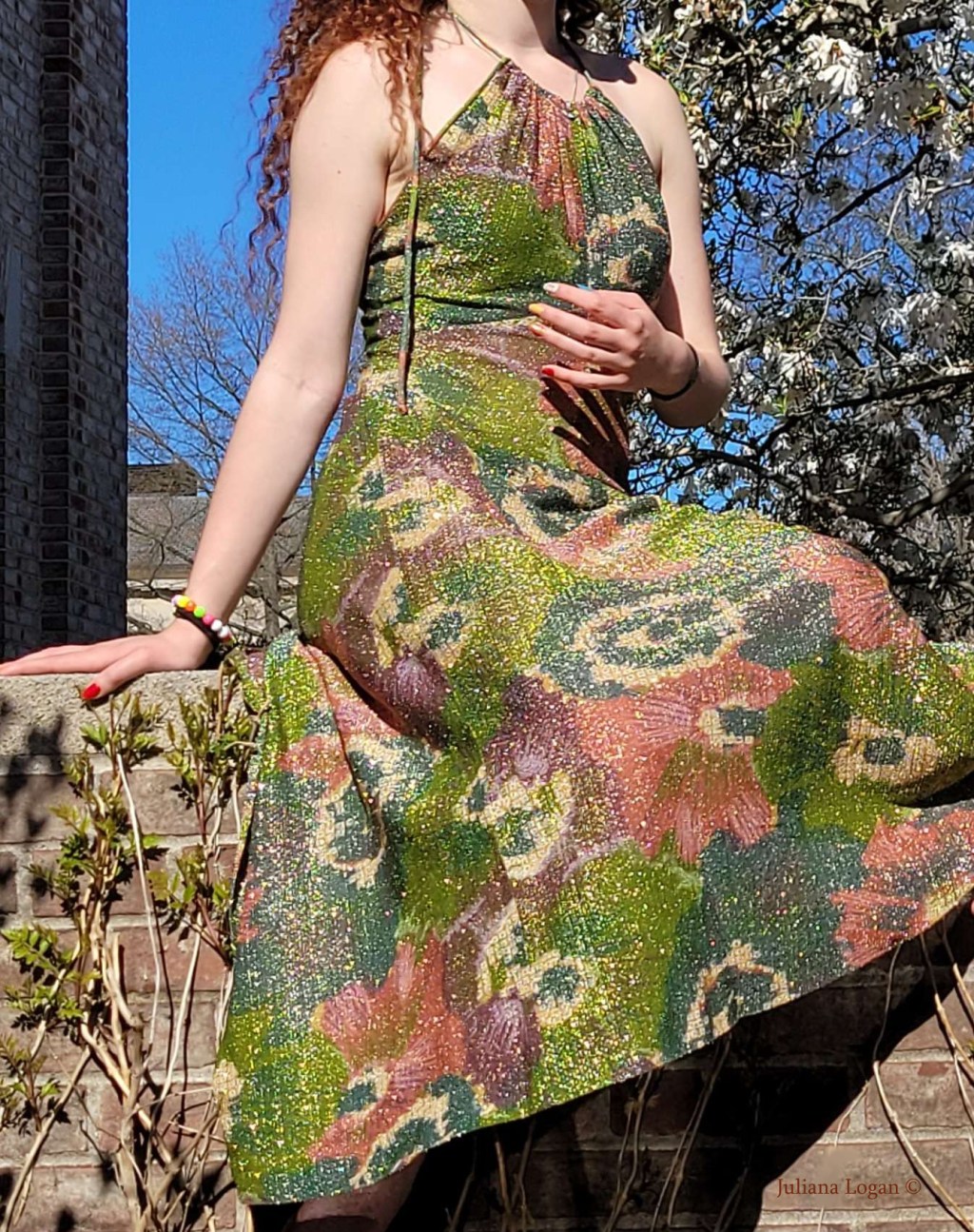
Poor to Popular in 56 years
What is Thrift
Thrift stores are all the rage at the moment, with thrift store hauls and thrift flips flourishing on social media. But thrift stores weren’t always trendy or even acceptable. I asked eleven people between the ages of 69 and 21 (anonymous answerers are referred to by an age and an initial) how thrift stores were perceived in their childhood, and I’ve compiled a rough timeline of thrift store perceptions based on when the interviewee was a teen.
60s-70s
Interviewee
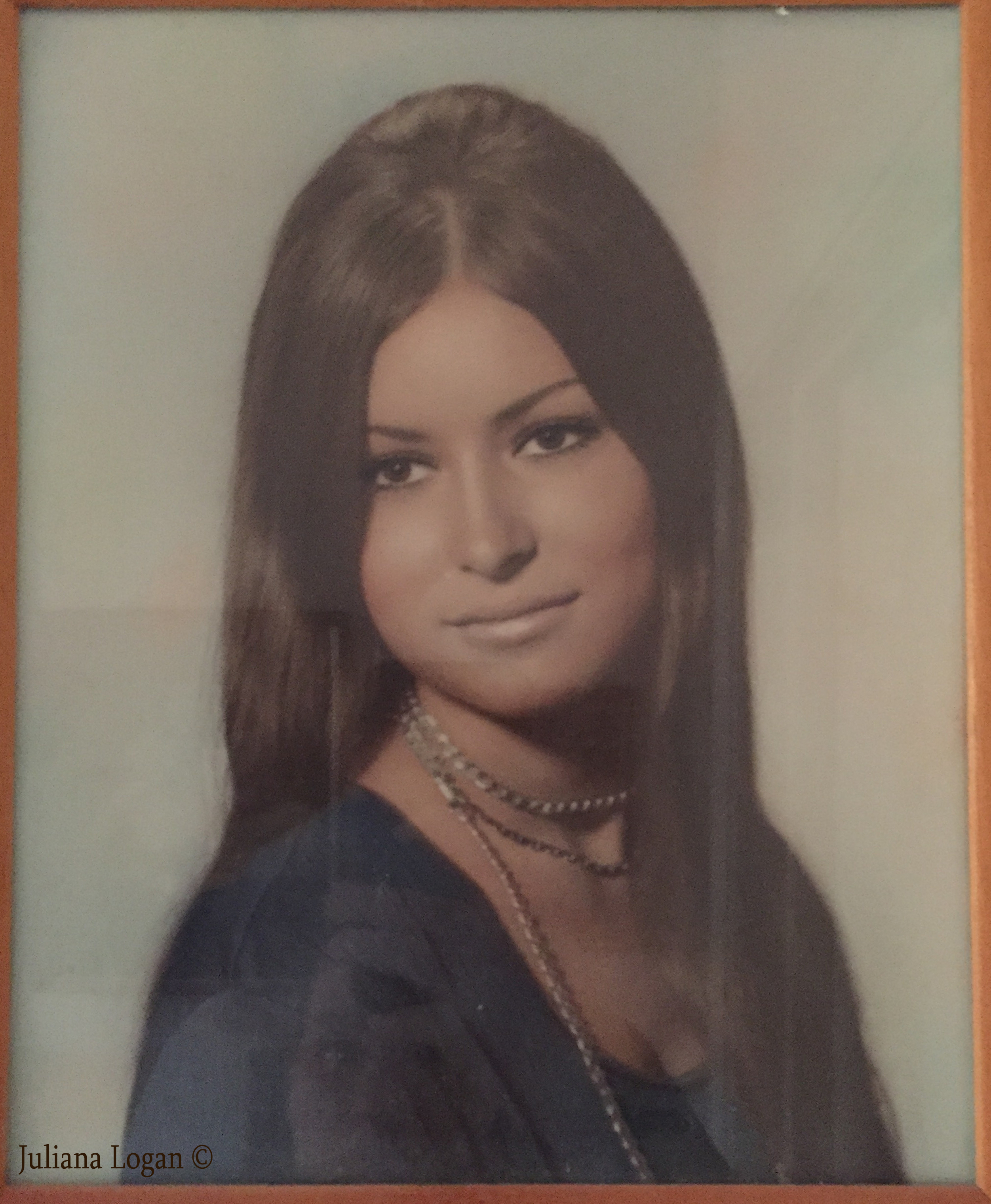
Starting off with my very own grandmother, Sue, who’s 69. She grew up on the east side of LA. She told me that at the time, they were known more commonly as secondhand stores, not thrift stores or thrift shops. When I asked her how people felt about them, she said “almost everybody I knew shopped at thrift stores, because the economy wasn’t very good at the time. Whenever you told somebody you had gotten something from a thrift store, they’d say “awww” because they knew they couldn’t get the same one.”
Other Low-Budget Options
Outside of thrift stores, her and her brothers got new shoes twice a year. Once for Christmas and once for Easter. The Christmas shoes were generally black, and the Easter shoes were white for her, but brown for her brothers. The shoes would come from the Sears catalog or get bought in person from the JCPenney. When I asked her why everything but shoes was thrifted, she told me that because of her scoliosis, her doctor had told her mother she had to have “good sturdy shoes.”
In high school, Kmart was the bargain store of choice, as Walmart did not exist at the time. Her friend group would bead and make designs to sew into tops to make it look fancier. She said “we all kinda did it out of necessity, but we also enjoyed doing it. We were self taught.” The group also made their own Halloween costumes out of thrifted items, often completely dismantling things to put them back together into what they wanted them to be. This enjoyment of creating with friends transferred into a source of income later on. She added that “When I wasn’t working I was making prom dresses and wedding dresses. I was hand beading because it was cheaper for me to do it than to have a bridal shop do it.” I know that she still alters beaded wedding dresses to this day, recently adding about three inches of beading to a dress that no longer fit a bride.
Learning to Sew
But would this source of income have been viable without the interest in thrifting? I asked about learning to sew, and she said she learned to sew by hand by watching her mom and aunt. But sewing on a sewing machine was required in 7th grade home economics classes. As she got older, her body type changed such that she could no longer buy ready made dresses. Either her mother had to make them by hand, or her aunt altered them. She learned to hem early due to her height, and although nobody in her family knew how to make buttonholes, one of her friend’s grandmothers knew how to sew them on by hand. She said “it helped us and it helped her. She didn’t do it for free, we paid her to do it.” This incredible community work stood out to me as uniquely of her era.
80s-90s
She moved on to discussing her children’s childhoods, including my aunt Toni (49) and my father Russell (40). They lived in Missouri, Texas, and Southern California at various points. She immediately told me that clothes were better, with new T-shirts and knit tops specifically made for women. The low budget stores of choice were Target, Walmart, Kmart, and JCPenney. When there were special occasions for Toni, they’d go to Macy’s. When Russell joined the boy scouts and they wanted “characters”, by which I extrapolate that she meant graphic T’s, she said that she learned how to tone paint in order to put the characters on his shirts, eventually teaching the boy scouts as well.
Other Low-Budget Options
But when my father was sixteen, he asked if she would stop buying his clothes from Target because the kids made fun of him. So any attempt at getting name brand clothes came from JCPenney, as their clothes were better quality and more affordable, whereas Sears’ were cheaply made.
Her most commonly thrifted items were sports equipment, from a place called Play it Again Sports. Russell’s hockey equipment came from there, as well as Sue’s own golf clubs.
Concluding Thoughts
She concluded by saying “We didn’t have a lot of money. We weren’t poor, but we didn’t have a lot of spare money… You know me, I’m always a bargain shopper, I look for the good stuff at a low price.” And if that isn’t the epitome of the thrifter mindset, I don’t know what is.

Interviewee
Moving on to my second interviewee, my mother Lynn. They are 40, and grew up in the San Diego area. They often alter and sew their own clothes to this day. Their explanations of thrifting in their childhood were a huge part of why I wanted to write this blog. Similarly to my father, my mother got bullied in school for wearing thrifted clothing. Their explanation as to why was different than anyone else’s, however.
Reasoning behind thrift stigma
“The thing is the 90s were hugely focused on designer brands and if you weren’t wearing designer, then you were obviously poor.” Later along the timeline, other interviewees cite looking poor as a reason why thrift stores were frowned upon, but the concept that the 90’s intense fixation on designer brands was what caused that perception is fascinating. I asked if it was possible to thrift designer brands, and Lynn responded that “the thing about thrifting designer is that by the time those pieces hit the thrift store it’s because they have gone out of fashion. But I definitely went to tons of vintage stores and when I managed to find cute vintage then it was “cool””
Concluding Thoughts
So potentially cool stuff could get bought from vintage shops, but vintage shops were at a much higher price point than thrift shops, so they were most commonly utilized for special occasion items. Everyday wear was still considered “poor” when it came from thrift stores.
90s-2000s
Interviewees
Here’s where we get into a bunch of anonymous answerers. M (37), D and W (36), C (34), and L (32). This subsection of people were very clear that thrifting was a necessity due to monetary limitations.
C was the first to bring up hipsters, saying “Thrift was not trendy at my age. You had a smaller group of early hipsters that would thrift.” A hipster is defined as a person who is following trends and fashions, but often are “othered” for it. D claimed it was seen as better to have less clothes, as long as they were new. Their family would go to the mall for three new outfits twice a year.
D said the common opinion was “kind of negative.” But, just like Lynn said, it was more to do with the perception of being poor. W and M agreed that there was a “bit of a stigma” surrounding thrift stores, but couldn’t recall actually seeing anyone get made fun of for thrifted clothes, it was simply common knowledge. L, however, was ridiculed and verbally bullied by their classmates for wearing used clothes.
Other Low-Budget Options
C complained that Buffalo Exchange was just as expensive as non-secondhand items, instead recommending Salvation Army (who I will not link as I am personally against their discriminatory policies), and mentioned there was a very local small business as well. D suggested Target, Kohl’s and JCPenney as budget friendly non-thrift stores, and W added Walmart, Kmart, and Shopko (which closed in 2019). W said that Target and department stores look “so boring” after thrifting for so long. C recalls the socially acceptable stores being Hot Topic, American Eagle, Hollister, and maybe Abercrombie if you had more money.
Learning to Sew
This group of people was more varied in their ability to alter or mend clothes. C’s friends knew how, and they recalled punk kids who thrifted would stitch using dental floss rather than using conventional sewing techniques. W is more likely to make something from scratch than to alter. D and M were never taught.
Concluding Thoughts
L’s experience with bullying led them to completely avoid thrift stores in their adulthood, but acknowledged that presently thrift stores are not so frowned upon. W admired their mother’s ability to make money stretch, and is not at all ashamed to say “Thanks! I got it at Goodwill!” when they get compliments, similarly to the common girl phrase, “Thanks! It has pockets!” D does all their shopping at thrift stores, but pointed out that they are “quite solidly poor, along with 80% of the US.” And claimed that their attitude towards thrift stores wasn’t impacted by the perception in their youth, going so far as to say “it never crossed my mind that there might be an issue with it.” However, when W revealed their enthusiasm for Goodwill, they amended by saying “I guess I do have a little bit of a hard time admitting to someone that the clothes I got were from a thrift store.” Despite an outward acceptance, there is often a kernel of shame hidden, even about our most mundane and favorite activities.
2010s-2020s
Interviewees
This group included Z (28), J and S (23), K (21), and myself (21).
Z was very pro-thrift, saying “Thrift shops have the best clothes” as their opener into the conversation. S saw thrifting as the norm, coming from a poorer location. Unlike previous groups who included Walmart in their non-thrift bargain clothes options, S considered Walmart a special occasion location. Sue told me that as a baby, my clothing came in equal amounts from standard stores and children’s resell shops specifically. I don’t remember feeling at all negative about thrift stores, but I grew up in an area with a very large family size, so there were many secondhand stores for children’s clothing specifically.
J described a childhood bias, saying they “thought shops were exclusively for poor people who couldn’t afford name brand clothes,” but added that this was what they were told, and they didn’t know better. They never personally saw anyone get made fun of for thrifted items. Interestingly, J informed me that people on dating apps suggest thrifting as a first date idea. What a leap, from a social death sentence to a date idea!
Learning to Sew
K displayed the most present-day bias of anyone I spoke to. They said “it’s not something people would be proud of or anything but it’s cheap and effective stuff” in direct contrast to (me talking about skill) However, they were also the only person in this group other than myself who knows how to sew. The lack of sewing knowledge can likely be traced to home economics no longer being a required course, but alteration of thrifted items seems like such an integral part of the process to me that I find it fascinating that this generation, who seemingly are the most open and proud of their thrifting, is also the one with the least amount of control over their thrifted items.
Concluding Thoughts
I would say at the moment, thrifting is considered cool, trendy, and the environmentally responsible thing to do. Many people are now aware of the fashion industry’s impact on our landfills, and more sustainable practices are praised. People often brag about their thrift finds, gatekeep thrift stores where they find particularly good items, and consider it a skill to be good at thrifting.
I believe part of the difference between previous generations and the current one is due to inherited knowledge, as well. Previous generations were forced to shop at thrift stores due to budgetary constraints, and for some that fostered a love for thrifting, and for others it created a system of avoidance. Whether these parents enjoyed the experience or not, they were able to pass down the knowledge of how to find good items to their children. But as W said, there is a difference between a parent approaching the subject by saying “this is a skill I’m good at and am teaching you” as opposed to “sorry kids, this is what we can afford”. My mother passed down a skill, so I never felt the stigma as a kid. And with more than half of the population of the US living paycheck to paycheck, I’m not surprised that thrifting has become a generally accepted practice.
Logan, J., & Fernandez, L. (2023, September 23). Childhood Thrift Perceptions. personal.
Logan, J., & Logan, S. (2023, September 23). Childhood Thrift Perceptions. personal.
 Jules Dragon Fashion
Leave a comment